

When Tooth Loss Begins to Affect the Jawbone
The jawbone depends on regular chewing pressure from tooth roots to maintain its strength and shape. When a tooth is lost, the bone in that area no longer receives this stimulation. Over time, the body gradually reduces bone volume where the root once existed.
Ongoing bone resorption can gradually alter the structure of the jaw. Changes in jaw structure can limit the locations where implants can be safely placed. Patients who have several missing teeth or unstable dentures often consult a dentist near you or a dentist in Langley to determine which tooth replacement options may still be appropriate.
Advances in implant dentistry now allow clinicians to restore chewing function in many patients who have already experienced some bone reduction. Careful examination helps determine whether implant treatment is suitable.
Why Jawbone Loss Happens After Tooth Loss
Bone loss after tooth removal is a natural biological response. The tooth root normally transfers biting pressure into the surrounding bone. Without this pressure, the body gradually begins to resorb the bone in that location.
Several conditions can increase the rate of bone loss:
- Long-term absence of natural teeth
- Periodontal disease affecting the supporting bone
- Trauma or infection around teeth
- Extended use of removable dentures
The amount of bone reduction varies between individuals. In more advanced cases, bone loss may limit the stability required for conventional implant placement.
Limitations of Conventional Dental Implants
Traditional implants require adequate bone height and width so the implant fixture can integrate properly with the jaw. When bone volume becomes limited, an implant may not achieve the stability required for long-term function.
In some cases, dentists recommend bone grafting procedures to rebuild the jaw before implant placement. Bone grafting can restore missing bone structure, but it often adds additional healing time before implants can be placed.
For some patients, clinicians may consider implant methods that use the remaining bone more efficiently.
A Full-Arch Implant System for Reduced Bone
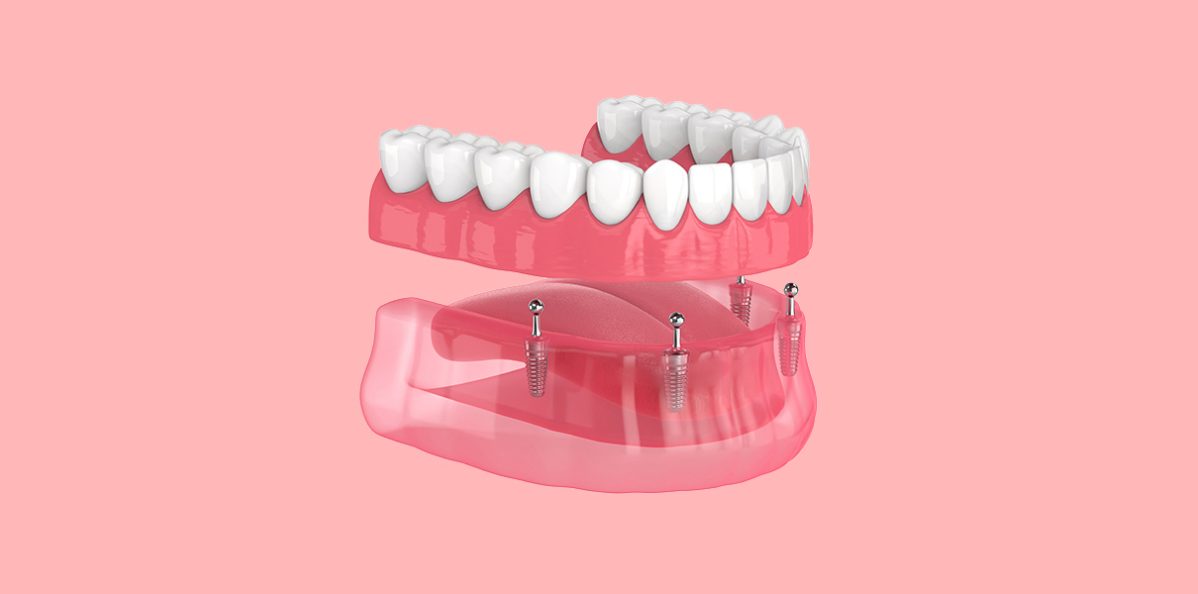
All-on-4 dental implants were developed to support a full arch of teeth using four strategically positioned implants. Instead of placing individual implants for every missing tooth, four implants support an entire prosthetic bridge.
This system relies on areas of the jaw that often retain stronger supporting bone. The prosthetic arch attaches to the implants and functions as a fixed restoration.
Patients exploring Dental Implants in Langley may encounter this option when several teeth are missing and bone reduction is present.
Strategic Implant Placement for Stability
The All-on-4 system uses carefully placed implants. Two implants are typically placed vertically in the front of the jaw where bone structure is stronger. Two additional implants are positioned at an angle toward the back.
Angled placement helps clinicians anchor implants into stable areas of bone while avoiding nearby anatomical structures such as nerves or sinus spaces.
Because implants are placed in stronger areas of bone, many patients can receive this treatment without needing bone grafting procedures.
Diagnostic Evaluation and Treatment Planning
Dentists begin by carefully evaluating oral health and the structure of the jaw. Three-dimensional imaging, such as cone beam CT scans, is commonly used to examine bone thickness and identify important anatomical structures.
These scans help clinicians determine the precise location and angle for implant placement. Medical history, gum health, and oral hygiene habits are also reviewed before surgery is recommended.
In some cases, clinicians such as Dr. Shafiq Kara use digital imaging to assess bone structure and determine whether implant placement can be performed safely.
Procedure Overview for Patients with Bone Loss
The treatment process usually begins with diagnostic imaging and treatment planning. During surgery, four implants are placed in predetermined areas of the jaw to support a full arch of teeth.
After implant placement, a healing period allows the implants to integrate with the surrounding bone. Once healing is complete, a final prosthetic bridge is attached to the implants to restore chewing function and appearance.
Healing, Maintenance, and Long-Term Care
After implant surgery, the jawbone gradually bonds to the implant surface through a biological process called osseointegration. During early healing, patients are often advised to follow a soft-food diet to limit pressure on the implants.
Regular dental visits allow clinicians to monitor healing and evaluate implant stability. Good oral hygiene and professional maintenance help protect the surrounding gum tissue.
In some situations, the All-on-4 method may reduce the number of treatment stages compared with approaches that require bone grafting and multiple implant placements.
A Treatment Option for Patients with Bone Loss
Chewing forces are shared across four implants, which improves stability when the back of the jaw has limited bone.
Even when bone reduction is present, modern implant dentistry offers several options for restoring missing teeth. All-on-4 dental implants use strategic implant placement to support a full arch of teeth while efficiently utilizing existing bone.
Patients who wish to explore implant treatment options may discuss their condition and restorative goals with the team at Sage Dental Implant & Smile Centre – Langley.
Author’s Bio
